Thursday, 17 May 2012

Reich's Beyond Outrage


My review of Robert Reich's "Beyond Outrage" as posted at barnesandnobles.com: (I gave it 3 out of 5 stars).

This is a very short book in which Reich gives an overview of the issues and inequities facing the American economy. There's not really much that is new here for people who regularly read his column/blog. He addresses a lot in these 85 pages so it tends to treat issues lightly and be quite polemic in nature. The solutions he offers are predictable, and reasonable to many on the left, but unlikely to be implemented, e.g., create a public option for healthcare, pour lots more money into infrastructure, get big money out of politics.

I'd been hoping for something more than a compilation of his articles, perhaps giving more time to considering and refuting the arguments that arise in response to his suggestions. Similarly, his solutions are unlikely to be supported by most Democrats, let alone the Republicans, so more attention to strategies to implement and/or partial measures that could help would also have been useful. To be fair, though, the book is very reasonably priced and well worth the small fee.

Thursday, 10 May 2012

Same sex marriage


One often hears/reads reductio ad ridiculum/slippery slope responses to proposals to legalize same-sex marriage. These arguments take the form of "if we allow same sex marriage, the next thing you know, people will be marrying their dogs or inanimate objects and the like" or "why stop at couples, if we're going to open the door to same sex marriage, why not let triads or quartets or even larger groups marry". This argument contends that unless we enforce the "male-female pairing" nature of marriage, we render the notion of marriage baseless and untenably vague.


It's worth spelling out explicitly why or whether such concerns are ill founded because they doggedly persist. Marriage doesn't have to be either a committed male-female pairing or a meaningless notion that can be applied to any sort of n-ary relation. The essential basis of marriage, I'd contend, is that it be an agreement to enter into an intimate lifelong relationship and that the agreement be freely made. Such relationships are recognized by the state in order to provide and support a framework of stability within which the participants might then contribute to society. As such, it's fairly clear why same sex marriage doesn't open the door to "man on dog" marriage. Dogs lack the wherewithal to enter into anything like a contractual situation as they lack the capacity to give their assent to a lifelong commitment. 


But what of n-ary relationships, where n>2? I think it's fairly clear that it is possible for people to freely enter into a commitment to maintain such a relationship. There we'd need to consider the "framework of stability" consideration. If as a matter of empirical fact, people can and do enter into three way relationships that flourish and provide a stable environment from within which the participants can raise children and participate in society, then perhaps that is a good argument for recognizing triadic marriages. If, however, such relationships tend to devolve quickly and/or cause extraordinary difficulty when it comes to determining child custody and support and such things, then recognizing such relationships as marriages might be imprudent. But the point is that there are principles, the very traditional principles that motivated the institution of marriage in the first place, not arbitrary physiological features that we can use when considering who should participate in marriage.

Friday, 27 April 2012

A proposal to save the NHL regular season from irrelevance

Year after year, the NHL playoffs are rife with upsets. This year, the eighth ranked LA Kings easily defeated the first place Vancouver Canucks. Top seeds defeat last place seeds less than 75% of the time.  In general, regular season success is not a great predictor of playoff success --  lower seed teams won half the first round series in 2012. The upshot of this is that so long as a team manages to qualify for the playoffs there is not a lot of motivation to win first place or gain a higher seed. As a result, regular season games risk becoming trivialized in the eyes of the fan.


However, while relative point total isn't a great predictor of playoff success, head to head competition records can be. The team that wins the regular season series between two teams wins the playoff series between them 77% of the time. So, teams are likely to be more interested in playing a team against which they have a good track record than in playing the one that has the fewest points.

So, one way the NHL might ensure that the regular season remains highly relevant to teams and fans would be to reward top finishing teams by allowing them to choose their opponent. Rather than obligating a first place team to face an eighth place team that has their number or that is on a roll because an injured star rejoined just as the season was ending,  give the first place team the option to choose any opponent from the 5th-8th place finishers. (The second place team would choose from the remaining three, etc.) This would allow the top finisher to pick the team against which they're more likely to have success and gives a much stronger incentive to keep fighting for a high seed late long after a team has qualified for the playoffs. This would provide much more incentive for teams to finish in first place and would keep fans interested long after their favourite team has qualified for the playoffs. Of course, a team has little motivation to fight for 5th rather than 8th, but as a matter of fact the lower seed teams are usually close enough to missing the playoffs that they require little further motivation other than securing a playoff spot.

(Another obvious way to make the regular season more relevant would be to introduce a bye system as is used in the NFL. Allow only 6 teams from each conference to make the playoffs and give a first round bye to the top two finishers. But this won't fly because owners are too fond of the money that playoff games bring in. They're not going to sacrifice four seven games series. Furthermore, there's a legitimate concern that a team waiting out a seven game series might not be as well prepared for the second round.)

Tuesday, 31 January 2012

On gay rights and biological determinism


I guess I missed the memo but it seems that it's now verboten to suggest that humans have any sort of choice at all in terms of the gender of the person(s) with whom they like to have sex. I say this because apparently Cynthia Nixon got into hot water for saying that she had chosen to take up an intimate relationship with a woman. (link). I think I understand the reasoning for it -- some might worry that the notion that gender preference might not be strictly biological will invite suggestions that "pray the gay away" therapy might work and/or that instead of society making room for gay people we can instead just get homosexuals to choose a different orientation. Also, if it's strictly biological, the story seems to go, it's more obviously unfair to deny them the rights and means to live the same sort of life that straight people have.


I think the obvious problem here, that both sides seem happy to ignore, is that almost all preferences we have involve a complicated mixture of biological and environmental factors. I recall learning or reading that sexual preference may well be more of a spectrum than a simple on/off switch, i.e., while some people may be heavily inclined to be straight or gay, there are lots of people in between that might be more or less interested in having sex with person of the same or different genders. But this is obvious, isn't it? Don't lots of people who eventually settle into a gay or straight lifestyle experiment in their youth w/ differing preferences? Are we saying that all those people were simply violating their biological destiny? We believe, I assume, that there's a strong biological component that influences other features that we find attractive, but we wouldn't be surprised to learn that a person who had previously preferred buxom blondes or tall women was now choosing to spend more time with short slender brunettes.

That aside, I also think it's worth thinking about why the extent to which homosexuality is fully biologically determined matters so much with respect to the civil rights issues. Consider that there's probably a strong biological component in whatever the makeup is of a person who becomes a psychopathic killer. But if we were to firmly establish that that were the case, it wouldn't follow that society had some sort of duty to accommodate them in this compulsion. OTOH, many of our civil rights have no biological basis. We believe that people should be free to say what they want, believe what they want, and worship as they wish. The basis for this isn't the belief that beliefs and utterances and religious practice are all biologically determined. I think the civil rights story is a pretty simple one. We don't have the right to do whatever our biology compels or inclines us to do, we base civil rights on considerations of the fact that there's much inherent utility in maximizing liberty especially on matters that have little or no effect on the rest of society. Why does the fight for gay rights have to be depend on any more, or something other, than that? It's ironic that the civil rights movement which spent so many years arguing, implicitly or explicitly, that biology is not destiny, now finds itself vehemently insisting that is.

Thursday, 19 January 2012

On the SOPA protests

There was something heartening and encouraging about the SOPA/PIPA protests yesterday. It's good to see that grass roots political action is possible, the extent to which the internet facilitates it and the fact that it might actually even have an effect. And I agree that both bills are troubling, an attempt to kill a gnat w/ a hammer and possibly missing the gnat. That said, it's also a bit troubling to compare the outpouring of response when people are threatened with the possibility of harsh action on copyright infringement to people reactions idly to the desecration or dismissal of so many other civil liberties. Illegal wiretapping? shrug.  Wars? yawn Give companies ability to sue to shut down websites that infringe on copyright?  HOLD IT RIGHT THERE, MISTER!!! Frustratingly, this action may say less about our eagerness to participate in democracy and a lot more about our desire for short term gratification.

Sunday, 15 January 2012

On downplaying corpse desecration

Regarding, the four marines videotaped urinating on the bodies of Taliban fighters, I don't disagree with those who point out it that it seems to actually rank relatively low on the list of transgressions that US troops have committed in the Iraq and Afghanistan campaigns. Furthermore, I agree with those noting that it's odd to strain at corpse desecration while swallowing the camel of torture. What I don't agree with is the implied conclusion that we should be making less of a big deal about this. Why not conclude instead that  we should have been making a bigger deal of the heretofore downplayed atrocities?

But there's another argument making the rounds that bothers me even more. Bill Maher and others are making an attempt to downplay the seriousness of the offense on the grounds that it's being committed against bad people. According to the likes of Maher and Loesch, it's not really such a terrible thing to urinate on the corpses of Taliban fighters because the Taliban are such odious people and/or have committed such odious offenses. This argument is one of the popular arguments that have been used for all sorts of egregious violations of civil liberties and international law since the "war on terror" (and, of course, most wars throughout history) has commenced. It's the argument that some people are so despicable and so unlike us that we can drop the ordinary rules and laws that distinguish civilized societies from beasts in the forest or the characters in Lord of the Flies. In fact, the argument when applied to corpse desecration is even more brutish as there's no further utilitarian appeal to justify the actions, as is often the case with attempts to justify torture, just plain vengeance and blood lust. Just as free speech means little unless it protects the most objectionable speech, these laws and protections mean something only if they actually do protect respect for those we're ordinarily least inclined to protect.

Update: I tweeted this post and Bill Maher responded and clarified that he didn't claim it was acceptable, just that the US has done far worse things that bothered him more. Fair enough, and in this post I didn't say he claimed it was perfectly acceptable, that was only in my tweet. Nonetheless, while Maher didn't exactly say it was perfectly okay, he was very dismissive of the incident w/ a "shit happens" (when agreeing with Rob Reimer), noted that it's "like a TD dance" and pointed out that they may have been honor rapists so he didn't care much, which is all pretty much indistinguishable from saying it was acceptable from where I'm sitting.

Thursday, 22 December 2011

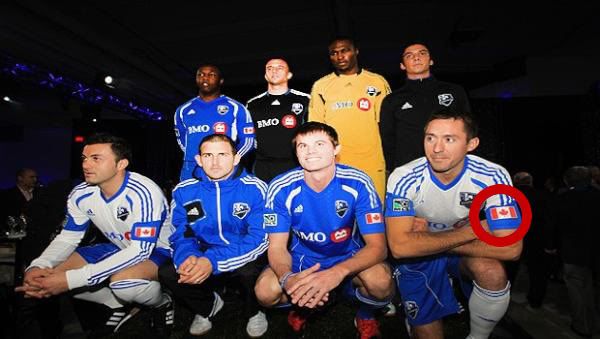
oh, eh, can you see ....

Their crappy musicians dominate the pop charts with their bland mindless music (link), its citizens cockily believe they live in the "greatest country in the world" (link), nationalistic logos (link, link, link, link) and a quest for world dominance pervade its sports culture, and, most telling of all, one has to cross the border in order to experience real winter weather. Clearly, Canada is the new USA.